
Commercial/Industrial Water Treatment FAQs
-
What is commercial water treatment?
Commercial water treatment improves water quality for businesses by removing contaminants, controlling hardness, and addressing issues that can affect equipment, operations, or product quality. Treatment systems are customized based on the facility’s water source, industry, and water usage.
-
What is industrial water treatment?
Industrial water treatment uses specialized equipment and treatment methods to improve water quality for manufacturing and specific processes. Depending on the application, systems may reduce hardness, remove contaminants, control corrosion, prevent scale, or produce high-purity water.
-
What is the difference between commercial and industrial water treatment?
Commercial water treatment is designed for businesses such as offices, hotels, schools, restaurants, etc.
Industrial water treatment is used in manufacturing and processing facilities where water is part of production, cooling, cleaning, or other industrial processes. Both use similar technologies, but industrial systems often handle higher water demands and specialized applications.
-
How does industrial water treatment work?
Industrial water treatment begins with testing the water to identify contaminants and operational needs. Based on the results, a customized treatment system is designed. This may include water softening, reverse osmosis, deionization, chemical treatment, carbon filtration, or other technologies to improve water quality and protect equipment.
-
Can water treatment help protect commercial equipment?
Yes. Commercial water treatment helps reduce scale, corrosion, sediment, and other contaminants that can damage boilers, cooling towers, dishwashers, ice machines, water heaters, manufacturing equipment, etc. Proper treatment can extend equipment life and reduce maintenance costs.
-
How do I know what commercial water treatment system my business needs?
The best system depends on your water source, water quality, industry, equipment, and daily water usage. Professional water testing and a site evaluation help determine which treatment technologies will provide the best results for your facility.
-
Can one system treat water for an entire commercial building?
Yes, many businesses use whole-building, point-of-entry water treatment systems that treat all incoming water. Additional point-of-use systems may also be installed for applications requiring higher-purity water, such as drinking water, laboratories, or manufacturing.
-
What is the difference between point-of-entry and point-of-use water treatment?
Point-of-entry systems treat all water entering a building. Point-of-use systems treat water at a specific fixture or piece of equipment, such as a drinking water faucet or ice machine.
-
How often should commercial water treatment systems be maintained?
Maintenance schedules vary depending on the type of equipment, water quality, and system usage. Most commercial water treatment systems should be inspected and serviced regularly to maintain performance and help prevent unexpected downtime.
-
Does commercial water treatment require custom design?
Yes. Every facility has different water quality challenges and operational needs. Guthrie & Frey Water Conditioning customizes treatment systems based on water test results, equipment requirements, flow rates, and business goals.
-
Can commercial water treatment reduce operating costs?
Yes, proper water treatment can improve equipment efficiency, reduce energy use, lower maintenance costs, minimize downtime, and extend the life of expensive equipment.
-
What areas does Guthrie & Frey serve for commercial water treatment?
Guthrie & Frey Water Conditioning provides commercial and industrial water treatment solutions throughout Wisconsin and the surrounding region. Contact our team to discuss your project and service location.
Commercial Business/Industry FAQs
-
What types of businesses need commercial water treatment?
Many industries benefit from commercial water treatment, such as:
- Hotels
- Food service
- Car manufacturing
- Breweries
- Pharmaceutical facilities
- Schools
- Office buildings
- Agriculture
- Greenhouses
- Food processing plants
- Textile and dye shops
- And more
-
What is purified water in the pharmaceutical industry?
Purified water is highly filtered water that meets strict quality standards for pharmaceutical manufacturing, laboratory work, cleaning, and product formulation. Treatment methods may include reverse osmosis, deionization, UV disinfection, and other purification technologies.
-
Do restaurants need water treatment?
Water treatment for restaurants improves the quality of drinking water, ice, beverages, and water for food preparation. It also helps protect dishwashers, steamers, coffee equipment, ice machines, and plumbing from scale buildup.
-
Do hotels need commercial water treatment?
Yes. Hotels use large amounts of water every day. Commercial water treatment helps improve guest satisfaction while protecting boilers, water heaters, laundry equipment, cooling systems, and plumbing from hard water damage.
Commercial Water Softener FAQs
-
How does a commercial water softener work?
Commercial water softeners remove hard minerals such as calcium and magnesium through an ion exchange process. This helps prevent scale buildup that can reduce equipment efficiency and increase maintenance costs.
-
How to size a commercial water softener?
Commercial softeners are sized based on water hardness, daily water usage, peak demand, and flow rate requirements. Professional water testing helps determine the correct system size for your facility.
-
How often does a commercial water softener need service?
Service frequency depends on water quality, system type, and usage. Regular inspections, salt replenishment, and preventive maintenance help keep commercial water softeners operating efficiently.
-
How does hard water affect a business?
Hard water can cause scale buildup inside boilers, cooling systems, water heaters, dishwashers, plumbing, and other equipment. Over time, this buildup reduces efficiency, increases energy costs, shortens equipment life, and leads to more frequent maintenance and repairs.
Hard water can also impact the quality of beverages, ice, and food products. It may also leave dishes and glassware looking spotty, reduce the effectiveness of soaps and detergents, and damage or stain linens and clothing.
-
Can you repair older commercial water softening systems?
Yes! We service all brands and models, including Fleck, Clack, and Autotrol systems.
Commercial Water Filtration & Reverse Osmosis FAQs
-
What is a commercial water filtration system?
A commercial water filtration system removes contaminants to improve quality, protect equipment, and support business operations. Systems may use sediment filters, activated carbon, reverse osmosis, UV treatment, or other technologies.
-
How do commercial water filters work?
Commercial water filters remove unwanted particles and contaminants as water passes through different filtration media. The treatment method depends on the contaminants being removed and the water quality goals.
-
What do commercial water filters remove?
Commercial water filters can remove sediment, chlorine, chloramines, iron, manganese, odors, organic compounds, and other contaminants. Many systems are designed to address specific water quality concerns.
-
How to select commercial water filtration systems?
Choosing the right commercial water filtration system starts with professional water testing. Water quality, industry requirements, flow rates, and equipment needs all help determine the best solution.
-
What is commercial reverse osmosis?
Commercial reverse osmosis (RO) uses a semi-permeable membrane to remove dissolved minerals, salts, and many contaminants from water. RO systems produce clean, quality water for industries that require high purity.
-
Why Choose Reverse Osmosis Water Filtration for My Facility?
- Protecting equipment: Prevent mineral buildup and corrosion in boilers, cooling towers, manufacturing equipment, pipes, and sensitive machinery.
- Reducing chemicals: Reduce the need for water treatment chemicals, creating a safer and more environmentally responsible operation.
- Improving product quality: Ensure consistent product quality in food and beverage production, pharmaceutical manufacturing, and other industries where water purity is paramount.
- Boosting operational efficiency: Consistent water quality reduces waste, supports smooth production, and improves overall output.
Complying with regulations: Meet stringent water quality standards, ensuring your operations are always compliant.
-
How Long Will It Take to Install a Commercial RO?
The installation time for a commercial RO system can vary significantly based on the system’s size, complexity, and the existing plumbing infrastructure at your facility. Smaller, more straightforward systems, especially those with pre-assembled skid mounts, can be installed relatively quickly. Larger, custom-engineered systems that require integration with existing processes or significant pre-treatment might take longer. During our initial consultation and site assessment, we will provide a clear estimate of the installation timeline for your specific project. Our goal is always to minimize disruption to your operations.
-
How Large Should My Reverse Osmosis System Be?
Sizing depends on water usage, desired quality, and the demands of your workflow. During our consultation, we’ll assess your water quality and volume needs to build a system of the appropriate size.
-
What Should I Look for in a Commercial Reverse Osmosis System Supplier?
When choosing a supplier for your commercial RO system in Wisconsin, consider the following key factors:
- Experience and Expertise: Look for a company with a proven track record in commercial and industrial water treatment, specifically with RO systems. They should understand Wisconsin’s unique water challenges.
- Customization Capabilities: Every business has unique needs. A good supplier will offer tailored solutions, not just off-the-shelf products.
- Comprehensive Services: Beyond installation, make sure they offer ongoing maintenance, emergency repair services, and readily available spare parts. You’ll want to be able to know who to call if something goes wrong.
- Reputation and References: Ask for testimonials or references from other businesses they’ve served.
- Local Presence and Support: A local presence like Guthrie & Frey Commercial Water will give you faster response times for service and support, which is critical for minimizing downtime.
Deionized (DI) Water FAQs
-
What is deionized or DI water?
Deionized (DI) water is water that has had dissolved mineral ions removed through an ion exchange process. It is commonly used where high-purity water is required.
-
What is deionized water used for?
Deionized water is used in laboratories, pharmaceutical manufacturing, electronics production, food processing, automotive applications, and other industries that require mineral-free water.
-
What impurities do DI water systems remove?
Deionized water systems primarily remove dissolved mineral salts. This includes both positively charged ions (cations like calcium, magnesium, sodium, potassium) and negatively charged ions (anions like chloride, sulfate, bicarbonate, nitrate).
For bacteria, particulates, viruses, or non-ionic substances, Guthrie & Frey can integrate additional treatment options. Our team leverages insights from our partnership with Michigan’s Besco Commercial. We can offer further solutions outside of DI water filtration, like carbon and sediment filters or UV sterilization.
-
How often do DI water systems need maintenance or resin replacement?
The frequency of maintenance and resin replacement for your DI water system depends on several factors, including:
- Water usage volume
- The quality of your incoming feedwater
- Required purity level of the output water
Typically, ion exchange resin beds need regeneration or replacement every 3-5 years, but this can vary. Guthrie & Frey offers tailored maintenance plans to ensure optimal performance and system longevity.
-
What is the typical lifespan of a commercial or industrial DI water system?
With proper design, installation, and consistent maintenance, a high-quality commercial or industrial DI water system from Guthrie & Frey Water can last 10 to 15 years or even longer. Regular servicing, timely resin replacement, and addressing any operational issues promptly contribute significantly to maximizing your system’s lifespan and return on investment.
-
Can a DI water filter system integrate with my current setup?
Guthrie & Frey specializes in designing and implementing DI water systems that integrate with your current water infrastructure. Our engineers will work with you to ensure the new system complements any existing pre- or post-treatment processes.
-
What Delivery Volumes and Frequencies Are Typically Offered by Water Treatment Companies?
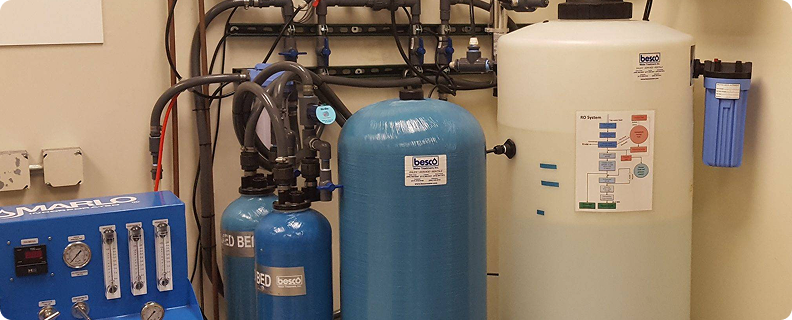
Water treatment companies recognize that different industries require varying volumes of DI water, so they offer flexible delivery options. For large-scale projects, one-time bulk orders can be arranged, while businesses with steady needs often rely on recurring deliveries. Delivery options range from smaller containers for specific applications to tanker trucks for high-volume operations.
At Besco, we understand the importance of adaptability. Our team works with you to develop a delivery plan that matches your operational needs, whether it’s a one-off bulk shipment or regular, scheduled deliveries. “We’re committed to making sure our customers always have access to the water they need,” says Ken Morgan.
-
Is deionized water the same as distilled water?
No. Both produce highly purified water, but they use different treatment methods. Deionized water removes mineral ions through ion exchange, while distilled water is purified through evaporation and condensation.
Commercial Water Testing FAQs
-
What does commercial water testing include?
Commercial water testing evaluates the quality of your facility’s water and identifies issues that could affect equipment, operations, or product quality. We can customize testing based on your industry and water source. With paid lab testing, we can check for a variety of quality issues, such as:
- Lead
- Arsenic
- Bacteria
- PFAS
- Nitrates
- Other contaminants
Free testing includes checking for:
- Hardness
- Chlorine
- Iron
- Copper
- pH issues
- Total dissolved solids (TDS)
The results help determine whether a water treatment system is needed and ensure it’s properly designed for your facility’s specific water quality and operational needs.
-
How often should commercial facilities test water quality?
Testing frequency depends on the facility, water source, and industry requirements. Many businesses perform water testing at least twice a year to monitor water quality, maintain equipment, and comply with applicable regulations.
-
Why is water testing important before installing a commercial water treatment system?
Water testing identifies contaminants, hardness levels, and other water quality issues before a system is designed. This helps ensure the treatment system is properly sized and addresses your facility’s specific needs.
Commercial Water Problems FAQs
-
What water problems are common in commercial buildings?
Common commercial water problems include hard water, scale buildup, corrosion, sediment, iron, manganese, chlorine, odors, bacteria, and high dissolved solids. Professional water testing helps identify the issues present so you can determine the best treatment solution.
-
How does hard water affect a business?
Hard water can cause scale buildup inside boilers, cooling systems, water heaters, dishwashers, plumbing, and other equipment. Over time, this buildup reduces efficiency, increases energy costs, shortens equipment life, and leads to more frequent maintenance and repairs.
Hard water can also impact the quality of beverages, ice, and food products. It may also leave dishes and glassware looking spotty, reduce the effectiveness of soaps and detergents, and damage or stain linens and clothing.